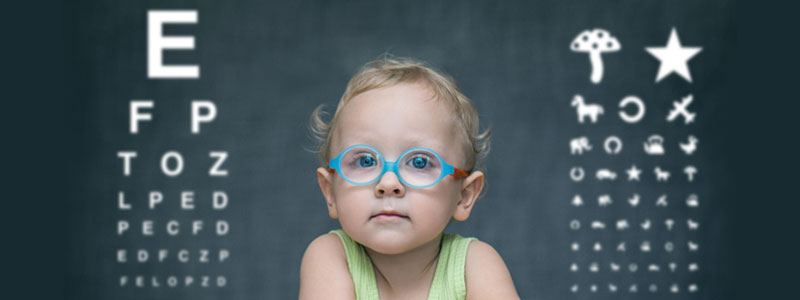
Vision therapy (Vision training or VT) is used to improve vision skills. It primarily focuses on improving visual skills in amblyopia and many binocular vision anomalies including accommodative disorders, vergence disorders, eye movement disorders, and the training of stereopsis. VT involves a series of procedures carried out in both home and office settings, usually under professional supervision by an Optometrist. Orthoptics is a similar discipline, but primarily involves exercises which work on eye alignment for patients with strabismus. Many strabismic surgeons have an orthoptist in-house.
Vision therapy can be prescribed when a comprehensive eye examination indicates that it is an appropriate treatment option. The specific program of therapy is based on the results of standardized tests and the person's signs and symptoms. Programs typically involve eye exercises and the use of lenses, prisms, filters, occluders, specialized instruments, and computer programs. The course of therapy may last weeks to several years, with intermittent monitoring by the eye doctor.
There is a long-standing and heated controversy between ophthalmologists and optometrists about which visual conditions can be treated, how best to treat them, the extent to which the certain visual tasks impact a person's life, and how effective vision therapy can be at improving higher-level functions such as coordination and cognition. This has led to several different philosophies and approaches to training the visual system, as well as several branches of alternative medicine. While both ophthalmological and optometric journals have published peer-reviewed studies on therapies and outcomes, ophthalmological journals have tended to lump alternative medicine practices in with optometric practices. To add further confusion, some vocal proponents of alternative medicine practices have been optometrists.
There exist a few different broad classifications of vision treatment philosophies, which have been traditionally divided between Optometrists, Ophthalmologists, and practitioners of alternative medicine:
- Orthoptic Vision Therapy, also known as orthoptics.
- Orthoptics is a field pertaining to the evaluation and treatment of patients with disorders of the visual system with an emphasis on binocular vision and eye movements. Commonly practiced by orthoptists, optometrists, behavioral optometrists, pediatric ophthalmologists, and general ophthalmologists, traditional orthoptics addresses problems of eye strain, visually induced headaches, strabismus, diplopia and visual related skills required for reading.
- Behavioral Vision Therapy, or visual integration vision therapy (also known as behavioral optometry).
- Alternative Vision Therapy
- There have been a number of other approaches which have not been studied in traditional medicine, though which some patients feel give them relief. These methods are commonly under scrutiny by ophthamlological and optometric journals. These alternative therapies are commonly practiced by unlicensed professionals, though a minority of optometrists also provide them.
Orthoptics aims to treat binocular vision disorders such as strabismus, and diplopia. Key factors involved include: Eye Movement Control, Simultaneous Focus at Far, Sustaining Focus at Far, Simultaneous Focus at Near, Sustaining Focus at Near, Simultaneous Alignment at Far, Sustaining Alignment at Far, Simultaneous Alignment at Near, Sustaining Alignment at Near, Central Vision (Visual Acuity) and Depth Awareness.
Some of the exercises used are:
- Near point of convergence exercises (i.e. "pencil push-ups").
- Base-out prism reading, stereogram cards, computerized training programs are used to improve fusional vergence.
- The wearing of convex lenses
- The wearing of concave lenses
- "Cawthorne Cooksey Exercises" also employ various eye exercises, however, these are designed to alleviate vestibular disorders, such as dizziness, rather than eye problems.
- Antisuppression exercises - this is being less commonly practiced, although occasionally it may be used.
There is widespread acceptance of orthoptic therapy indications for:
- Convergence insufficiency. Patients who experience eyestrain, "tired" eyes, or diplopia (double vision) while reading or performing other near work, and who have convergence insufficiency may benefit from orthoptic treatment. Patients whose outward drift occurs at distance rather than at near distance are less ideal candidates for treatment.
- Intermittent exotropia. This is often linked to convergence insufficiency.
Behavioral VT aims to treat problems including difficulties of visual attention and concentration, which behavioral optometrists classify as visual information processing weaknesses. These manifest themselves as an inability to sustain focus or to shift focus from one area of space to another. Some practitioners assert that poor eye tracking may impact reading skills, and suggest that vision training may improve some of the visual skills helpful for reading.
Behavioral Vision Therapy is practiced primarily by optometrists who specialize in the area. Historically, there has been a difference in philosophy among optometry and medicine regarding the efficacy and relevance of vision therapy: Major organizations, including the International Orthoptic Association and the American Academy of Ophthalmology have concluded that there is no validity for clinically significant improvements in vision with Behavioral Vision Therapy, and therefore do not practice it. However, major optometric organizations, including the American Optometric Association, the American Academy of Optometry, the College of Optometrists in Vision Development, and the Optometric Extension Program, support the assertion that non-strabismic visual therapy does address underlying visual problems which are claimed to affect learning potential. These optometric organizations are careful to distinguish, though, that vision therapy does not directly treat learning disorders.
Vision therapy treatment aims to train: Gross Visual-Motor skills, Fine Visual-Motor skills, Visual Perception, Peripheral Vision, Contrast & Color Perception.
Some of the exercises in VT involve the use of:
- Loose prisms, near point of convergence - for vergence training
- Loose lenses (concave and convex), lens flippers, near point of accommodation - for accommodative training
- Stereoscopes, stereogram cards, vectographs, anaglyphs, amblyoscopes, synoptophores, computerized training programs, and base-out reading prism - for fusion and vergence training
- Marsden balls, rotation trainers, and saccadic fixators for eye movement training
- Visigraph / ReadAlyzer reading eye movement trackers
- Balance board/beams
- Directional sequencers
© 2018-25. Samko Eye Hosptital. All Rights Reserved